
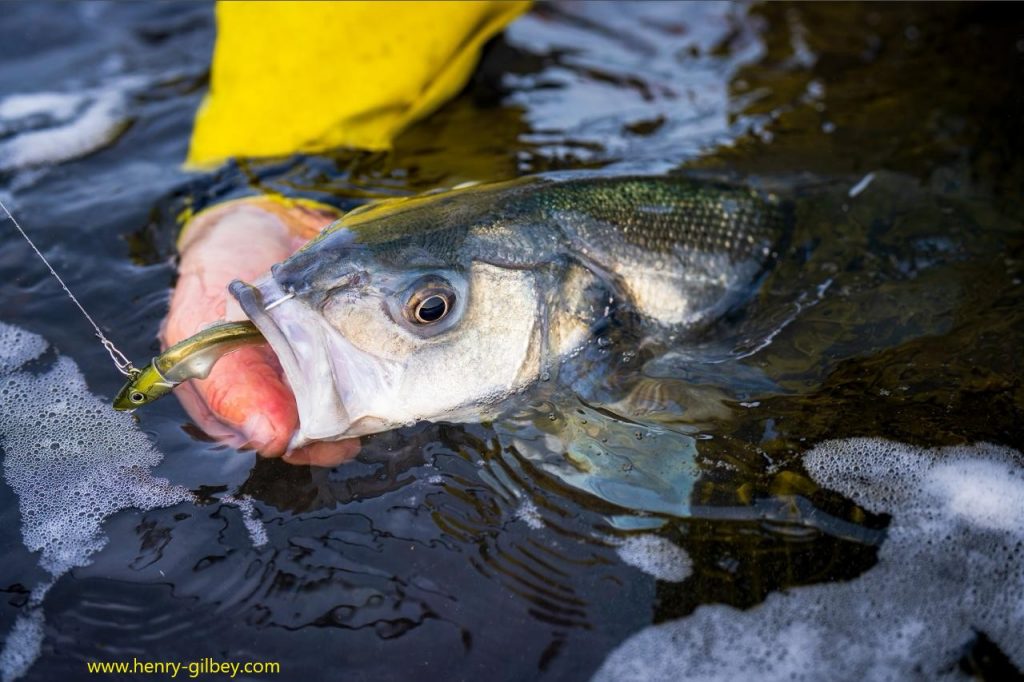
On 30th June, the ICES scientists published their sea bass advice for 2027. So what does it mean for the stock and for sea anglers?
My take: it will cause fishery managers to set fishing pressure too high in 2027 (the ICES recommendation could mean killing up to 27% of the stock if the stock is only 21,000 tonnes – the lower bound of the ICES stock estimate). Expect the stock to fall as a result. And wave goodbye to any possible increase in social and economic benefits in 2027 from a bigger stock and more big bass for you to catch.
How do we fix this mess? We need ICES start making it crystal clear how uncertain its FMSY recommendation is (FMSY is the level of fishing pressure that theoretically kills the greatest tonnage of bass over time) and for Defra to pay attention to this. Defra should stop using the FMSY recommendation and instead start targeting a bigger bass stock and maximising social and economic benefits. Bass Angling Conservation is working on achieving this and we need your continuing support.
The ICES scientists say the bass stock has increased slightly and, as a result, they recommend increasing fishing pressure again in 2027, to nearly 5,600 tonnes. To put this in context, two years ago they were recommending killing just 2,800 tonnes, so there has been a doubling of the recommended fishing pressure in just two years. It begs the question, is this wise?
If the fishery managers follow this scientific recommendation, the scientists estimate the stock will shrink by 7% in 2027. But only two years ago, the scientists were telling us we needed to rebuild the stock. Is the stock really now at a safe level? And is it safe for us to shrink it again?
What should we make of this ICES recommendation?
Firstly, we need to understand that there is an extremely high level of uncertainty attached to the ICES stock estimate. The stock could be anywhere in a range between 21,000 tonnes and 33,000 tonnes. You might think it would be sensible to set catch limits cautiously, so if the stock was at 21,000 tonnes, there would only be a very low risk of pushing it back down to a level where rebuilding is needed again. But the ICES advice doesn’t involve that degree of caution.
Secondly, ICES calculates its recommended fishing pressure (FMSY) by forecasting way into the future (ICES runs its model for 150 – 200 years). The extremely high level of uncertainty involved is not mentioned in the assessment.
There are more problems with the way ICES does the forecasting, but I think you get the picture – the inherent level of uncertainty in forecasting means we should take the ICES recommended fishing pressure with a pinch of salt. Instead, fishery managers should be asking “do we want to grow the stock in 2027 and, if so, how do we set fishing pressure to give us a high probability of achieving that?”
But my prediction is the fishery managers will not act in this enlightened manner. Instead, some commercial fishers will see the stock has increased and the ICES recommended fishing pressure has increased and hold out their hands for catch limit increases. The fishery managers will give them this and will justify it by saying “ICES told us this is sustainable” – without recognising the ICES recommendation is highly uncertain and problematic (something ICES should be communicating very clearly).
Recreational fishers may get an increase in the bag limit as a sweetener for the commercial increases and shrinking the stock, but it is quite possible we will be discriminated against again as we were in 2021, 2022, 2023, 2024 and 2025, when commercial catch limits were increased but the bag limit was not.
Comment (1)
John Devlin| July 20, 2026
Great article guys.
Thank you.
John D,
Ireland.