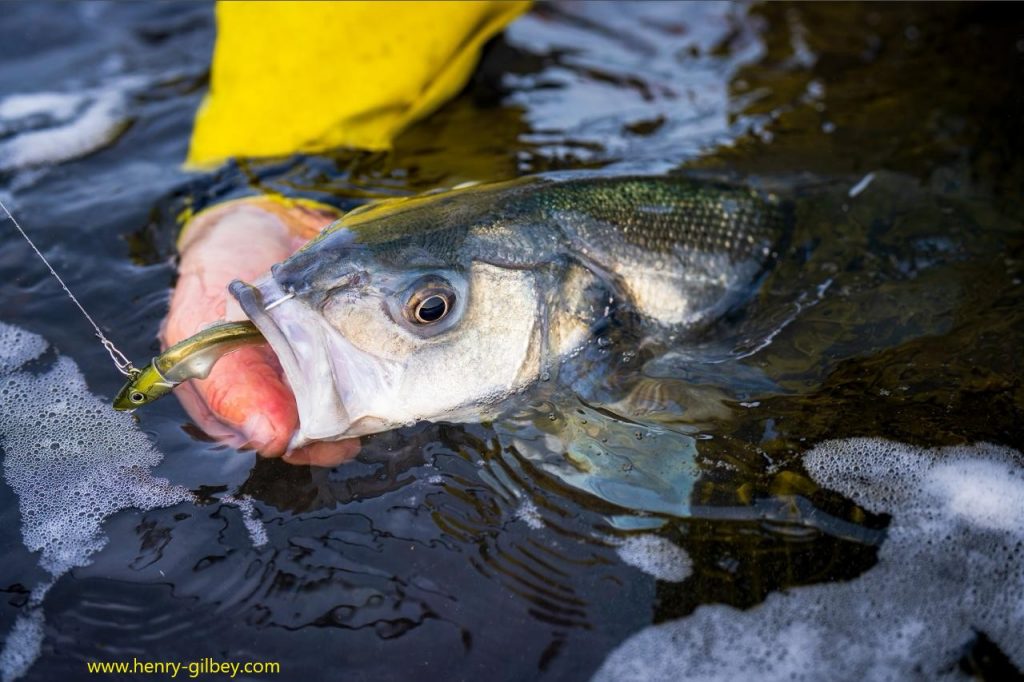
We’ve been asked why Defra removed Bass Angling Conservation from the Bass Management Group. Apparently, Defra has provided the BMG with some reasons and these will appear in the minutes of the last meeting. Here is our perspective.
We have stubbornly and persistently fought for the BMG to start its most critical work. We have raised serious issues with the scientific advice and said the BMG must take these into account when advising on bass fishing opportunities. We have drawn attention to tasks being implemented without stakeholder approval.
Removing BAC comes at a cost. It will greatly erode recreational sea fishers’ trust in Defra and the BMG and make it harder to deliver the Bass FMP. Remaining BMG members may wonder what they are allowed to say before Defra removes them for “hampering” its work. Failing to address stakeholder concerns by shutting down discussion is not in the spirit of stakeholder engagement. Say goodbye to any real co-development and co-management.
Sea anglers deserve nothing less than strong, independent representation on bass management. BAC will continue to hold Defra to account and ask the difficult, but necessary, questions. But this will now happen outside the BMG.
More detail is provided below.
Control of the BMG
The BMG should be an autonomous stakeholder group and the Terms of Reference say Defra will chair for the first year and will then hand over to another member. But Defra never stepped down as Chair, it holds a tight grip on the agenda and the BMG defers to Defra.
With Defra directing meetings and shutting down discussion of issues such as which tasks to prioritise, we see no chance of the BMG delivering what recreational sea fishers value most: an abundant and resilient bass stock, fewer “blank” sessions, and a good chance of catching a big bass.
Bass FMP work
BAC has pushed to prioritise work on Alternative Harvest Strategies so that there is an alternative to following science advice on how to kill the most bass possible over time. We have also asked to start work on how to incorporate social and economic criteria into bass fishery modelling and decision-making so that benefits to coastal communities can be maximised. These are the most critical parts of the Bass FMP. But Defra’s prioritisation matrix says they are a low priority, so the BMG cannot work on them. BAC challenged the prioritisation but was unable to make headway with Defra.
The question now needs to be asked: what has the BMG delivered for recreational sea fishers? We can’t think of anything.
But Defra has made sure the BMG delivers for commercial fishers: an Authorisation Review was announced before the newly formed BMG had even met and was completed in record time. By contrast, the Shore Netting Review that Defra promised recreational fishers has been indefinitely delayed because Defra won’t prioritise the legal resource to review it.
ICES scientists’ fishing pressure advice
There are serious problems with the ICES science advice. In 2025, independent scientists said: 1) the ICES fishing pressure recommendation (“FMSY”) is not precautionary[1]; and 2) if we fish bass at FMSY and there is average recruitment, we should expect to drive the stock down to a dangerously low level (below “Blim”) by 2031[2].
But Defra says the BMG is the wrong forum to raise the quality of the ICES advice. We can’t see how the BMG can meaningfully provide input into the fishing opportunities negotiations with the EU without recognising the deficiencies in the ICES science advice.
Accountability
Output from BMG subgroups is supposed to go to the BMG for stakeholder approval. The Terms of Reference say “The BMG will be responsible for reviewing and, if appropriate, approving all task and finish group products and recommendations.”. And the Bass Authorisation Review report states: “All proposals remain subject to formal decision-making processes led by Defra and the BMG.”
However, the MMO has been instructed to start implementing three recommendations from a BMG subgroup, without the BMG having approved them. This cuts directly across the mandate of the BMG.
This raises the question: what is the point of the BMG? Is it just for show? To allow the “stakeholder” box to be ticked?
[1] “The ICES MSY approach to reference point estimation is not precautionary” – Winker et Al 2025
[2] “Effets de l’augmentation des plafonds de captures sur les stocks de bar nord et sud” – Ifremer, December 2025.
Defra, acting in its role as Chair of the Bass Management Group, has removed Bass Angling Conservation from the BMG and its subgroups.
BAC is a strong supporter of the goals of the Bass Fisheries Management Plan and has provided considerable constructive support to the BMG. But we have also consistently challenged the prioritisation of Bass FMP work and have been critical of the BMG not having been involved in some bass fishery decisions. We have also tabled serious concerns with the ICES science advice used in making bass fishing decisions.
BAC strongly believes the most important goals of the Bass FMP are:
the maximisation of social and economic benefits for coastal communities; and
developing alternative harvest strategies that don’t target killing the most bass over time.
BAC’s work for an excellent bass fishery will continue outside the BMG. Our primary focus is providing the evidence base to support the decisions needed to bring about an excellent bass fishery. We will continue to lobby for improvements to the bass fishery and to oppose proposals that will damage it.
We are extremely grateful for the strong support we continue to receive from the recreational sea fishing community.
Ifremer, the French national fisheries science institute1, has modelled the Northern bass fishery between 2026 and 2031 and advised that, due to expected lower recruitment2, following the official ICES FMSY advice3 is expected to shrink the bass stock to unsafe levels4.
Bass Angling Conservation has summarised the report in English and provided a brief discussion of Ifremer’s findings. You can read it here and download it.
If you would like to read the original Ifremer report (in French), please click here
juvenile bass maturing and joining the mature spawning stock ↩︎
aimed at maximising the tonnage of bass killed over time ↩︎
under the best recruitment scenario, below Btrigger, the level below which management measures are needed. Under the worst recruitment scenario, below Blim, the level below which recruitment is impaired and the stock may not recover, even if all fishing mortality were to be stopped. ↩︎
Bass Angling Conservation regularly attends the fisheries stakeholder meetings (Regional Fisheries Group) for the South to South East region (area VIId).
Here is what we said at the last meeting – NB we’ve tidied it up to make it a bit clearer. If you’d like to listen to the meeting, you can do that on a Government website here:
Just looking at that dismal mackerel quota take-up by under 10 metre boats reminded me I’ve been receiving comments from recreational fishers having increasing difficulty catching mackerel on the south coast and it makes me wonder whether any catch per unit of effort goes into the assessments?
Sole
I just pulled up the sole assessment and the stock is in a real mess. You can argue about the level of recruitment, but there’s a pattern of low recruitment in recent years. The top confidence interval for the stock is almost at Bpa (the level below which rebuilding is needed), so the stock is likely to be below Bpa. The answer to that is to fish at a lower level. I’ve lost confidence in the Fmsy numbers (i.e. recommended fishing pressure level) as I’ve learned how they’ve been calculated – I’m inclined to take them with a pinch of salt. The objective should be to try to grow the stock year on year. We can’t forecast very far ahead with any degree of accuracy because of the massive uncertainty. So why don’t we do something very pragmatic and simple – say we’ll try to grow the stock each year. Maybe that will also take us away from having these huge variations in fishing opportunities as well. What we’ve got doesn’t really make any sense – it doesn’t work.
Uncertainty in ICES Science Advice
I’m laughing to myself as I look at the catch scenarios table and I see something ridiculous. The spawning stock biomass estimates for 2028 are to the nearest tonne and that is just nonsense. There’s no real discussion in any of this ICES advice about the level of uncertainty. We can we can pick holes in recruitment, we can pick holes in all sorts of different aspects of it, but these are intended to be best estimates, nothing more than best estimates. And yet the way that it’s presented is as if it precise – fishing pressure should be no more than 163 tons. To talk about 163 tons in the context of all of the uncertainty in the model and data – and not to say “this is really uncertain”. Managers need to be aware this is really uncertain. If you don’t recognize this uncertainty and you treat everything as if they are exact values, you get into this nonsense of fishing opportunities jumping up or down every year. It doesn’t work for fishers and it probably doesn’t work for the stock either. You need something much more progressive and incremental when you’re trying to recover a stock.
A recent report published by the Adam Smith Institute (ASI) proposes replacing the UK’s existing quota system with permanent, tradeable property rights, giving each commercial fisherman a fixed share of the Total Allowable Catch (TAC) in perpetuity.
Commercial fishermen undoubtedly need certainty to invest in vessels, equipment and businesses. But certainty does not require granting perpetual fishing rights over a public resource.
The proposal would make permanent a historical allocation of quota that was originally granted free of charge. That allocation was based largely on recorded landings, a system that disadvantaged many small-scale fishers whose catches were not fully captured in official records. Making these allocations permanent would not correct historical inequalities; it would preserve them indefinitely.
The report also places a strong emphasis on improving economic efficiency within the commercial catching sector. However, fisheries management is not simply an exercise in maximising the economic efficiency of one group of resource users.
Fish are a public resource
Wild fish stocks are a public natural resource to be managed on behalf of society as a whole. Governments have a responsibility to allocate access to those stocks in the public interest.
This requires balancing many legitimate objectives, including conservation, recreational fishing, sustainable commercial fishing, coastal communities, and the interests of future generations, while also ensuring fairness between sectors.
The key question is not simply who can extract the greatest economic value from fish stocks today. It is how access to a shared resource should be allocated in a way that is sustainable, adaptable and delivers the greatest overall benefit to society over time.
Fish populations shift, climate change alters marine ecosystems, scientific understanding develops and public priorities evolve. Any system of fishing rights must therefore preserve the ability of future governments to respond to changing circumstances rather than permanently fixing today’s allocation of fishing opportunities.
Recreational fishing cannot simply be ignored
Perhaps the most striking omission from the ASI paper is its failure to consider recreational fishing as a legitimate user of the UK’s fish stocks. Commercial fishermen are not the only people with an interest in how those stocks are managed.
Millions of people participate in recreational sea angling. This supports significant economic activity through charter boats, tackle shops, accommodation providers and hospitality businesses and contributes to the economies of coastal communities. Recreational anglers are not merely pursuing a leisure activity; they are important users of a shared public resource.
For some species this matters enormously. For the Northern bass stock, scientific assessments estimate that recreational anglers catch more bass than the commercial sector. Yet the report offers no explanation of how permanent commercial fishing rights would protect the interests of recreational fishers, or how future governments could adjust access arrangements if doing so produced greater economic, social or environmental benefits.
A proposal that permanently allocates access to one user group without addressing how the interests of other users of the resource would be protected is fundamentally incomplete.
Certainty does not require perpetual fishing rights
None of this means commercial fishermen should lack certainty. Fishing is a capital-intensive industry and businesses need confidence to invest. But there is a significant difference between long-term certainty and permanent fishing rights. The current quota system already provides considerable stability while retaining some ability to reform allocations in the public interest, where justified and with appropriate notice. The case for certainty does not require access to a public resource to be converted into permanent private entitlements.
A more balanced approach would retain public stewardship of fishing opportunities over time. Rather than allowing access rights to become permanent assets that can be bought and sold indefinitely, fishing opportunities should remain subject to public management and the ability to reallocate them when circumstances change.
This principle has already been recognised in UK fisheries discussions. The Bass Management Group’s 2025 Authorisation Review considered proposals to prevent newly issued bass authorisations from becoming transferable assets when vessels are sold. One of the stated benefits was that this would help maintain flexibility in managing fishing effort, enable opportunities for new entrants and prevent fishing authorisations becoming primarily valuable because of their commodity value.
The principle is important: fishing opportunities should exist to support sustainable fisheries and public objectives, not become financial assets whose ownership is divorced from active participation in the fishery.
Don’t compound yesterday’s mistake
The UK introduced fixed quota allocations in 1999, based largely on historical catches, with quota shares allocated free of charge. Over time, these allocations became valuable commercial assets, creating significant private wealth from access to a public resource.
However, historical catch records did not provide a complete or fair picture of participation in the fishery. Larger vessels with more complete catch records were often better placed to secure quota allocations, while many small-scale fishers with less complete records received a smaller share of future fishing opportunities than their actual contribution might have justified.
Making these allocations permanent would lock in the inequalities created by the original allocation. Existing quota holders would receive a major windfall, while future generations of fishermen would have to purchase access from those who already hold the rights, rather than obtain opportunities through public allocation. This would create additional barriers for young fishermen and small-scale operators seeking to enter the industry.
If reform of fishing rights is considered necessary, a wider question should also be asked: where governments allocate valuable access to a scarce public resource, should the public receive some benefit in return?
Many countries charge resource rents or licence fees for access to valuable natural resources. However, any such approach would need to be carefully designed. It should not undermine the viability of fishing businesses that may operate on narrow profit margins, particularly small-scale fishers.
The principle is that access to public fish stocks should be managed to deliver the greatest benefit to society as a whole, balancing economic viability, environmental sustainability, coastal communities and the interests of future generations — rather than permanently transferring valuable rights away from public stewardship without the public receiving a return.
Economic efficiency is not the only objective
Tradeable quota allows, in theory, the market to determine where fishing opportunities can be used most efficiently within the commercial catching sector. But economic efficiency within commercial fishing cannot be the only measure of a successful fisheries system.
The allocation of fishing opportunities is not simply a question of allowing the most efficient operators to acquire them. It is a decision about who benefits from a shared natural resource, and it affects not only commercial businesses, but also recreational fishers, coastal communities, new entrants, the marine environment and future generations.
A market-based approach can create unintended consequences. Experience from transferable quota systems shows that fishing rights can become concentrated among fewer, larger operators and financial investors. This can increase the cost of entering the sector, reduce opportunities for young fishers and small-scale operators, and weaken the connection between fishing rights and the communities that have traditionally depended on fishing.
A successful fisheries management system must recognise both the potential benefits of markets and their limitations. The purpose of fishing rights should not be to maximise the commercial value of those rights, but to ensure that access to a shared public resource delivers the greatest overall benefit to society.
Keep fish stocks under public stewardship
Commercial fishers need a stable and predictable framework. They need confidence to invest, plan for the future and run viable enterprises. The existing quota system already provides considerable certainty for quota holders. Supporters of permanent fishing rights argue that they would provide additional benefits, including stronger incentives for stewardship by giving rights holders a long-term interest in healthy fish stocks.
However, the extent to which making existing quota rights permanent would deliver additional improvements in fisheries outcomes remains uncertain. The long-term health of fish stocks depends on many other aspects of fisheries management, including ambitious stock recovery targets, transparent and robust scientific advice, effective monitoring and enforcement, and improved data collection. Improvements in these areas may offer greater opportunities to improve the sustainability of fisheries, while avoiding the risks associated with permanently transferring control of a public resource into private hands.
Fish stocks are a shared public resource. Decisions about access to those stocks must balance the many legitimate interests involved, including recreational fishing, conservation, sustainable commercial fishing, coastal communities and future generations. The value of fish stocks extends beyond the income generated by commercial catches, and the allocation of access may need to change over time as ecosystems, economies and society evolve.
Permanent fishing rights would make such changes more difficult, limiting the ability of fisheries managers to respond to changing stock distributions, improved scientific understanding and changing public priorities.
The UK’s fish stocks should remain under public stewardship, with access granted on terms that can adapt over time to deliver sustainable fisheries and the greatest overall benefit to society.
On 30th June, the ICES scientists published their sea bass advice for 2027. So what does it mean for the stock and for sea anglers?
My take: it will cause fishery managers to set fishing pressure too high in 2027 (the ICES recommendation could mean killing up to 27% of the stock if the stock is only 21,000 tonnes – the lower bound of the ICES stock estimate). Expect the stock to fall as a result. And wave goodbye to any possible increase in social and economic benefits in 2027 from a bigger stock and more big bass for you to catch.
How do we fix this mess? We need ICES start making it crystal clear how uncertain its FMSY recommendation is (FMSY is the level of fishing pressure that theoretically kills the greatest tonnage of bass over time) and for Defra to pay attention to this. Defra should stop using the FMSY recommendation and instead start targeting a bigger bass stock and maximising social and economic benefits. Bass Angling Conservation is working on achieving this and we need your continuing support.
The ICES scientists say the bass stock has increased slightly and, as a result, they recommend increasing fishing pressure again in 2027, to nearly 5,600 tonnes. To put this in context, two years ago they were recommending killing just 2,800 tonnes, so there has been a doubling of the recommended fishing pressure in just two years. It begs the question, is this wise?
If the fishery managers follow this scientific recommendation, the scientists estimate the stock will shrink by 7% in 2027. But only two years ago, the scientists were telling us we needed to rebuild the stock. Is the stock really now at a safe level? And is it safe for us to shrink it again?
What should we make of this ICES recommendation?
Firstly, we need to understand that there is an extremely high level of uncertainty attached to the ICES stock estimate. The stock could be anywhere in a range between 21,000 tonnes and 33,000 tonnes. You might think it would be sensible to set catch limits cautiously, so if the stock was at 21,000 tonnes, there would only be a very low risk of pushing it back down to a level where rebuilding is needed again. But the ICES advice doesn’t involve that degree of caution.
Secondly, ICES calculates its recommended fishing pressure (FMSY) by forecasting way into the future (ICES runs its model for 150 – 200 years). The extremely high level of uncertainty involved is not mentioned in the assessment.
There are more problems with the way ICES does the forecasting, but I think you get the picture – the inherent level of uncertainty in forecasting means we should take the ICES recommended fishing pressure with a pinch of salt. Instead, fishery managers should be asking “do we want to grow the stock in 2027 and, if so, how do we set fishing pressure to give us a high probability of achieving that?”
But my prediction is the fishery managers will not act in this enlightened manner. Instead, some commercial fishers will see the stock has increased and the ICES recommended fishing pressure has increased and hold out their hands for catch limit increases. The fishery managers will give them this and will justify it by saying “ICES told us this is sustainable” – without recognising the ICES recommendation is highly uncertain and problematic (something ICES should be communicating very clearly).
Recreational fishers may get an increase in the bag limit as a sweetener for the commercial increases and shrinking the stock, but it is quite possible we will be discriminated against again as we were in 2021, 2022, 2023, 2024 and 2025, when commercial catch limits were increased but the bag limit was not.